Rainy Day Productivity: Why Coworking Outperforms WFH | Eaton Club
Relentless Storms and Humid Weather: Is WFH a Benefit or a Productivity Trap?
In the post-pandemic era, Working From Home (WFH) has gradually solidified as a standard employee perk in Hong Kong, with many enterprises leveraging it as a flexible selling point to attract talent. When the plum rain and typhoon seasons strike between May and September, bringing torrential downpours and grey skies, management often generously encourages remote working to spare teams from treacherous commutes. However, this seemingly beneficial perk often transforms into a long-term corporate pain point.
From a managerial perspective, the drawbacks of prolonged WFH are becoming increasingly evident: teamwork synergy is eroded, establishing and communicating core corporate values becomes exceedingly difficult, and communication gaps emerge. For employees, domestic distractions and continuous visual interruptions at home severely fracture deep focus. High-performing leaders are realising that to sustain healthy operational output, teams do not need isolation at home; instead, they require a professional environment that completely blocks out external weather stresses, infuses wellness, and actively reconstructs team cohesion.
This guide serves as a 2026 commuter and flexible workspace guide. We dissect why migrating to premium Grade-A coworking spaces in Hong Kong outperforms home isolation, examining factors from acoustic engineering, environmental psychology, and biophilic design to covered transit infrastructure.
Table of Contents
- 1. Humidity, Dim Lighting, and Lack of Structure: Three WFH Efficiency Killers
- 2. Biophilic Design — A Psychological Oasis to Dynamic Rainy Season Mood Swings
- 3. 100% Weatherproof MTR Access: Eliminating Commute Friction at the Source
- 4. Head-to-Head: WFH vs Eaton Club Landlord-Managed Workspace Matrix
- 5. Frequently Asked Questions on Workplace Environment & Wellness
- 6. Conclusion: Secure Your Team’s Peak Output with Optimised Environments
 1. Humidity, Dim Lighting, and Lack of Structure: Three WFH Efficiency Killers
While home working might seem comfortable during fair weather, relentless rain and gloomy days expose severe domestic limitations that silently compromise cognitive performance:
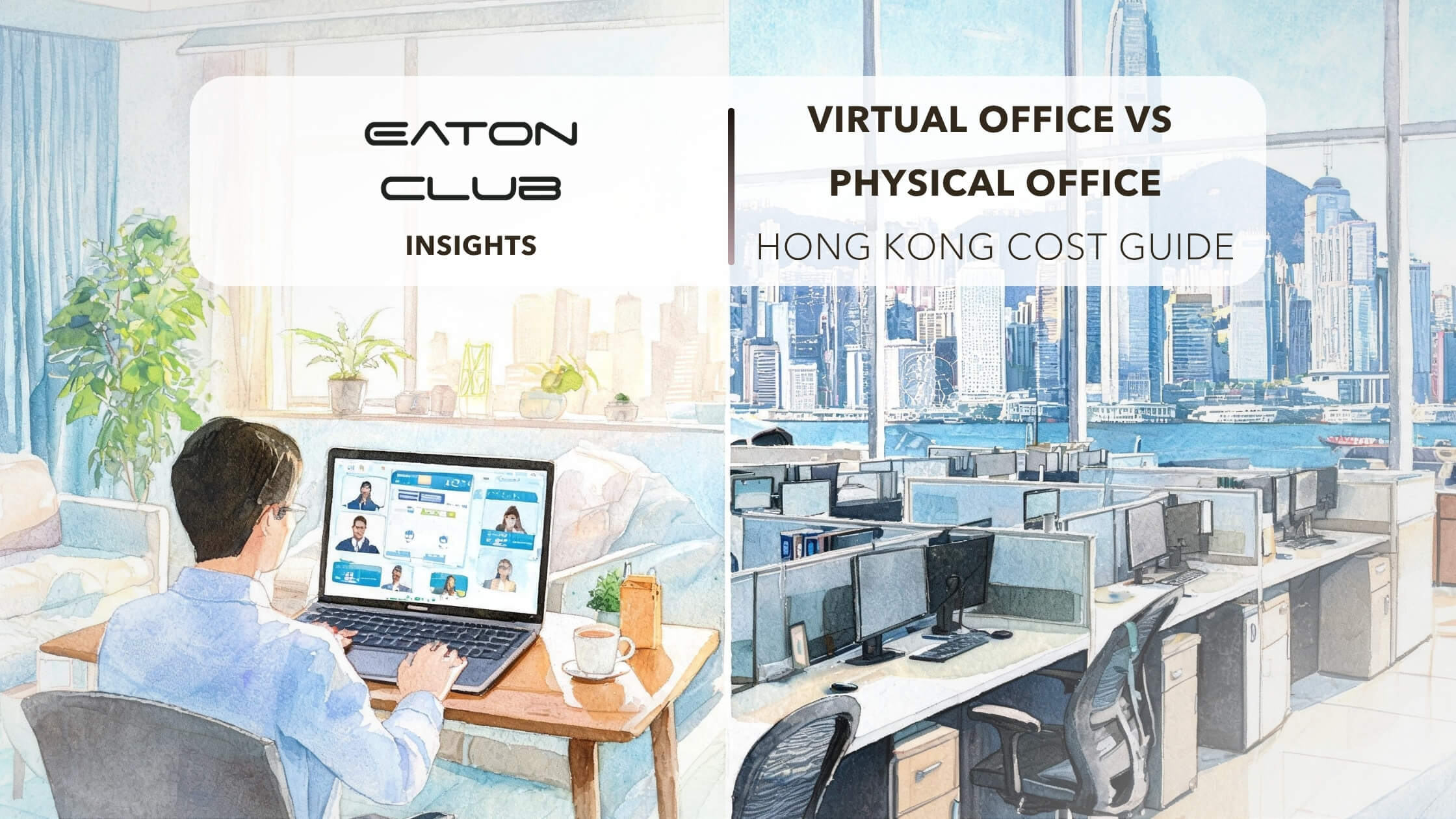
- The Reality of Hong Kong’s Cramped Living Space: This remains the fundamental structural bottleneck. Hong Kong’s per capita living space is notoriously limited; many employees do not have the luxury of a dedicated study or separate workspace. WFH forces them to work on living room dining tables or bedside desks. The resulting overlap with domestic life completely dissolves psychological boundaries, making home working a mental and physical fatigue trap.
- Humidity and Atmospheric Sluggishness: Hong Kong’s relative humidity during the wet season routinely climbs above 90%. Standard residential flats lack industrial-grade climate dehumidification, and damp air increases melatonin secretion in the body, prompting persistent drowsiness and sluggish cognition.
- Fragmented Focus from Domestic Noise: With family members confined indoors during heavy rain, household noises — from televisions to kitchen activities — continuously interrupt deep focus. Research shows that once interrupted, a knowledge worker takes an average of 23 minutes to regain their original state of flow.
💡 If your team struggles with remote collaboration gaps: Read our in-depth report Setting Up Business in HK 101: Navigating Flexible Workspace and Hybrid Operations to find out how to balance asset light agility with high-performing physical spaces.
2. Biophilic Design — A Psychological Oasis to Dynamic Rainy Season Mood Swings
Environmental psychology indicates that prolonged confinement in dim, enclosed spaces can trigger Seasonal Affective Disorder (SAD), leading directly to poor decision-making. Top-tier flexible workspaces do not merely provide desks; they place employee wellness at the core of spatial planning.
Across Eaton Club’s flagships (Three Garden Road in Central, Great Eagle Centre in Wan Chai, and Langham Place in Mong Kok), we strategically integrate robust biophilic design elements:
Natural Daylight Optimisation and Real Indoor Greenery
We maximise natural daylight exposure through expansive floor-to-ceiling windows, complemented by beautifully placed real greenery. Even when skies are grey, the indoor brightness and vibrant organic touches stimulate dopamine production, soothing rainy day anxiety and yielding up to a 15% increase in cognitive performance.
Earthy, Premium Ergonomic Furniture
Our interiors leverage warm, natural timber and earthy colour palettes, anchored by world-renowned Herman Miller ergonomic task chairs. This tactile and visual warmth lowers cortisol (stress hormone) levels, ensuring peak physical support and deep focus.
Beyond visual biophilia, Eaton Club’s elegant shared pantry and club bar counter spaces serve as perfect replenishment hubs on dark rainy days. Employees can step away from their desks to grab freshly ground coffee or hot herbal teas, reset in a relaxed, beautifully tuned acoustic environment, and naturally interact with teammates, avoiding the isolation of WFH.
3. 100% Weatherproof MTR Access: Eliminating Commute Friction at the Source
Employees dread rainy days not because of the work, but because of “commute friction” — broken umbrellas, wet clothes, and long, damp waiting times for transport. However, when your workspace resides inside Hong Kong’s most connected Grade-A landmarks, commuting transitions into an effortless walk:
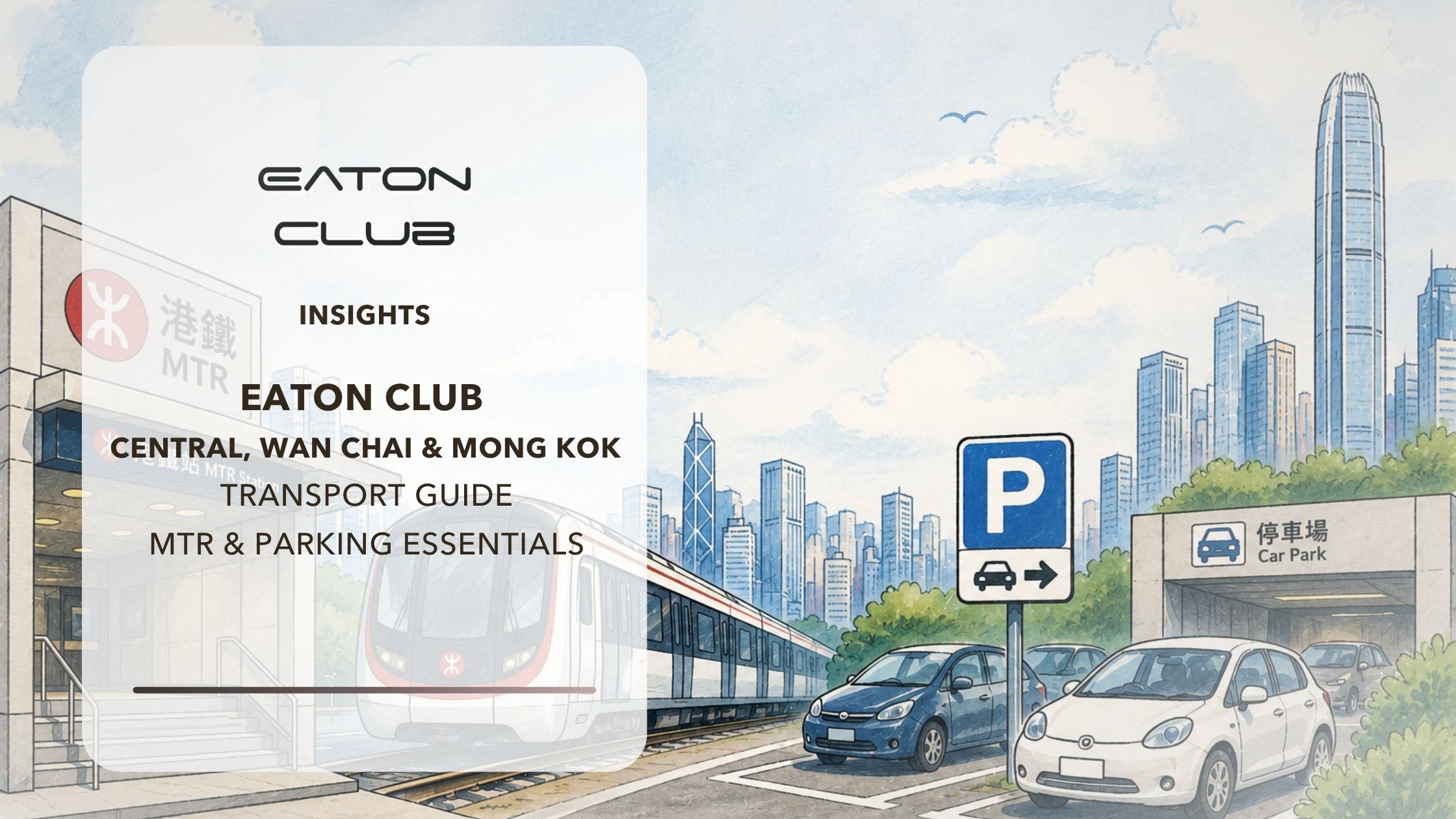
- Mong Kok (Langham Place): Exiting Mong Kok MTR Station Exit C3 leads directly into the Langham Place basement shopping concourse. Walk through the fully indoor, air-conditioned underground network, take the dedicated office lobby elevator, and arrive at our workspaces on the 48th and 49th floors. Enjoy 100% covered, dry access without ever opening an umbrella.
- Wan Chai (Great Eagle Centre): Located immediately beside Exhibition Centre Station Exit B3. Stepping out of the ticket barrier leads straight onto the covered pedestrian footbridge network, offering air-conditioned transit directly to our doors.
- Central (Three Garden Road): Designed with a grand, covered drop-off loop driveway, allowing passenger cars and taxis to pull right up to the lobby entrance, completely sheltered from the elements. The building also houses over 500 covered, spacious parking spaces, making driving to work effortless.
4. Head-to-Head: WFH vs Eaton Club Landlord-Managed Workspace Matrix
To assist HR directors and corporate operational leads with strategic space planning, we have contrasted the performance metrics of home working against Eaton Club’s landlord-managed workspaces during wet weather conditions:
A rigorous comparison reveals that the fundamental value of Grade-A flexible workspace multiplies during inclement weather. Rather than serving as a basic hotdesk, it represents a professional ecosystem integrating environmental engineering, spatial psychology, and concierge-level services to protect your business ROI through the rainiest periods.
5. Frequently Asked Questions on Workplace Environment & Wellness
Q1: Why do Grade-A building HVAC systems control humidity and fatigue better than home air conditioning?
This comes down to advanced building engineering. Home air conditioners usually stop dehumidifying once they reach their target temperature, causing humidity to surge back in on rainy days. In contrast, Grade-A commercial central HVAC systems continuously cycle moisture out, keeping relative humidity locked at a comfortable 50% to 60% — the optimal range for deep cognitive focus. Additionally, they introduce continuous fresh outdoor air cycles to lower CO2 accumulation, eliminating the typical stuffiness and sleepiness associated with home environments.
Q2: Does biophilic design really translate to a quantifiable business ROI?
Indeed it does. Biophilic design is much more than mere aesthetics. According to global building standards (such as the WELL Building Standard), introducing natural light and organic design elements generates substantial business returns: it reduces employee absenteeism and sick leave by up to 58% and lowers task error rates by 12%. Over a prolonged rainy season, this translates to robust, uncompromised productivity and optimized operational expenses (OPEX).
Q3: Can our team members flexibly work out of any Eaton Club centre on severe rainy days?
Absolutely. This is the cornerstone benefit of the Eaton Club ecosystem. As a private office or dedicated desk member, your team gains access to our entire flexible network across Central, Wan Chai, and Mong Kok. If a sudden rainstorm makes traveling to a specific district difficult, your staff can easily check into the nearest Eaton Club to utilize our shared pantries, club bar counters, or Hot Desking facilities, continuing their day under the exact same landlord-backed premium infrastructure.
6. Conclusion: Secure Your Team’s Peak Output with Optimised Environments
In a hybrid business landscape that tests corporate agility, savvy leaders understand that choosing a workspace is about securing your team’s efficiency engine and wellness defense line. Prioritising cheap rent over humidity control, lighting, and psychological wellness creates massive friction that manifests directly in lost output and increased employee turnover.
By positioning your firm at Eaton Club, you ensure that regardless of the storm outside, your team operates in a dry, bright, and highly stimulating environment backed by Great Eagle and Champion REIT. Leave behind the fatigue and friction of WFH, and let Hong Kong’s premium sky-high landmarks elevate your brand value and operational performance.
Tailor Your Frictionless Premium Workspace
Ditch the sluggishness of WFH during this wet and typhoon season.
Let Eaton Club’s corporate spatial experts structure a high-ROI hybrid office deployment for your brand.